

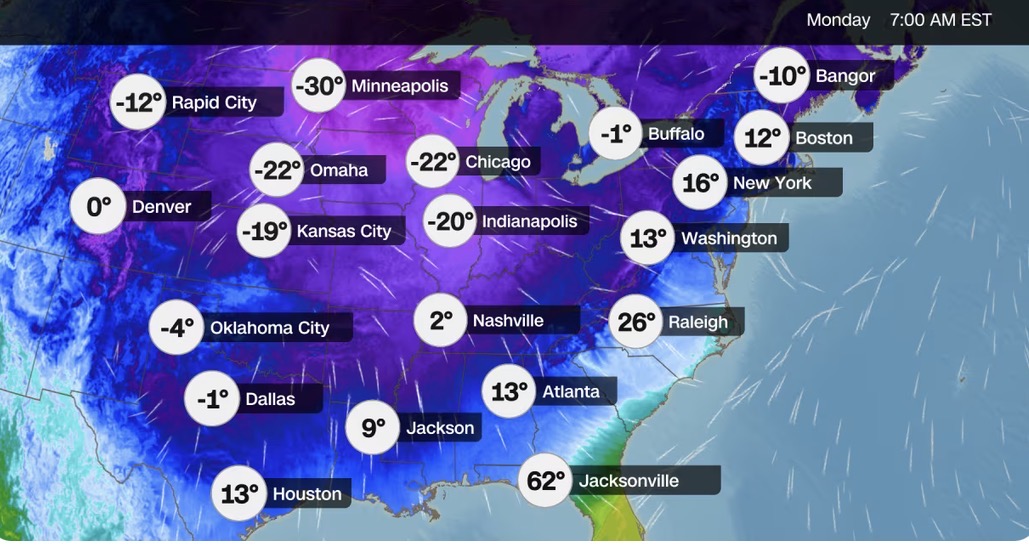
A massive winter storm is hitting a huge slice of the country with freezing rain, heavy snow, and Arctic cold—creating a dangerous mix for roads, power grids, and travel.
Winter Storm Fern ice storm impacts are expanding fast across the United States. The storm is pushing a wide band of snow, sleet, and freezing rain from the southern Rockies to New England, with dangerous cold piling on behind it. As a result, travel is being disrupted at a national scale, and power outages are spreading in multiple states.
What makes this storm different is the combination. In the South, ice is loading trees and power lines. Meanwhile, in the Northeast and Mid-Atlantic, heavy snow is shutting down major airports and slowing road crews. On top of that, Arctic air is keeping conditions risky even after precipitation moves out.
What’s happening across the U.S. right now
The National Weather Service has posted winter storm warnings covering a massive part of the eastern U.S., with Reuters reporting warnings spanning roughly 118 million people. At the same time, Reuters reported about 157 million were being warned about extreme cold, including dangerous wind chills in parts of the Plains.
Weather.com’s live coverage describes impacts reaching from New Mexico to the Northeast, with thick ice reported in parts of the South and heavy snow blanketing areas from the Midwest into New England.
Why the ice threat matters more than the snow in many places
Snow is obvious. Ice often is not.
Freezing rain can make roads look merely wet, even when they’re slick. Then bridges and overpasses freeze first, so crash risk rises quickly after sunset and during the overnight refreeze. Weather.com also warned that “wet and icy roads can look very similar,” which is exactly why people get caught off guard.
Also, ice adds weight. When it builds to disruptive levels, limbs snap and lines sag. That’s how outages cascade—especially when wind arrives behind the storm.
Power outages: where the storm is hitting hardest
Power loss has become one of the storm’s biggest immediate threats.
Reuters reported more than 1 million homes and businesses were without electricity across eight states at the height of the storm on Sunday. Later, Reuters cited PowerOutage.us showing more than 959,000 customers still without power Sunday evening, with Tennessee accounting for about a third of outages.
Meanwhile, Weather.com reported outages across the South “skyrocketed,” linking ice buildup on the ground and on power lines to rapid service interruptions.
What to do if your power goes out
- Keep one warm room. Close doors, block drafts, and layer blankets.
- Charge devices early. Cold drains batteries faster.
- Use heaters safely. Keep space heaters away from anything flammable.
- Avoid carbon monoxide. Never run grills or generators indoors.
Travel disruption: flights are collapsing at major hubs
This storm is not regional anymore. It’s a national travel event.
AP reported more than 10,800 flight cancellations on Sunday, calling it the largest cancellation event since the pandemic. In addition, AP noted massive cancellation rates at Northeast airports, including Philadelphia and New York-area airports, with wide ripple effects expected for days.
Reuters also reported major carriers canceled more than 11,000 U.S. flights scheduled for Sunday, with airports in New York, Philadelphia, and Charlotte seeing at least 80% of flights canceled.
Delta said it was operating a reduced schedule amid the ongoing winter weather, with impacts hitting hubs including Atlanta, Boston, and New York.
If you’re flying in the next 48 hours
- Rebook early through the airline app.
- Screenshot your itinerary and receipts.
- Ask about refunds if your flight is canceled.
- Expect “cascading delays,” even outside the storm zone.
Cold behind the storm: the danger doesn’t stop when the snow does
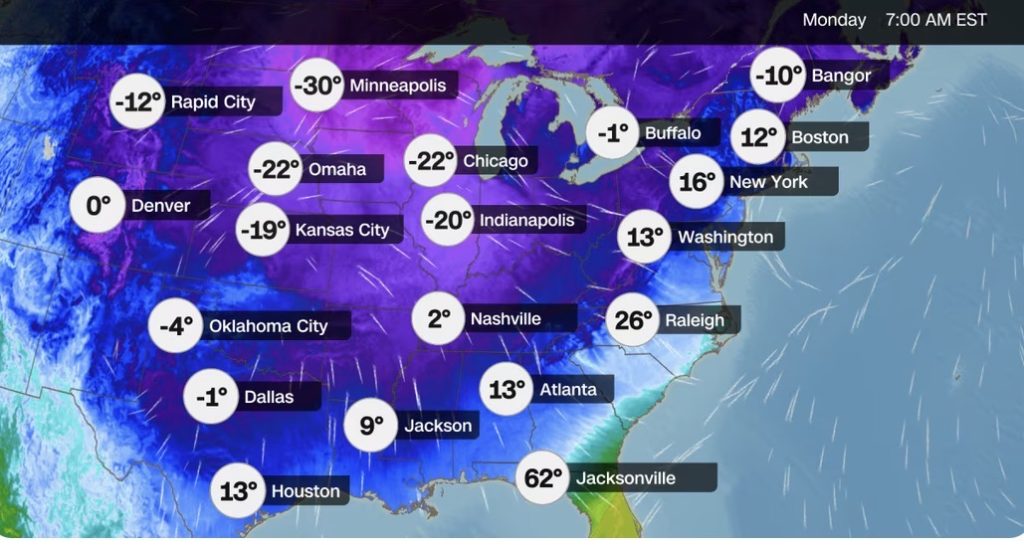
Even as the main storm shifts east, the cold air behind it can keep conditions hazardous.
Reuters described the post-storm pattern clearly: Arctic air is forecast to rush in behind the system, which can prolong icy conditions for days. In other words, untreated roads can refreeze, and ice on lines can stay heavy longer than expected.
This matters for two reasons. First, it extends crash risk. Second, it slows recovery because repair crews face ongoing freezing conditions.
The grid strain story: why power systems are under pressure
Beyond local outages, the storm is testing the power system at scale.
Reuters reported the PJM Interconnection—serving 67 million people—had nearly 21 gigawatts of generation outages on Sunday, about 16% of PJM’s Sunday demand. Reuters also reported PJM issued a pre-emergency order for some customers in its curtailment program to reduce usage.
In addition, Reuters reported spot wholesale power prices surged into the hundreds of dollars per MWh in multiple regions, and real-time prices topped $1,800/MWh in parts of Virginia’s Dominion territory, tied to high demand and system constraints.
That’s a behind-the-scenes story with real-world consequences: when supply tightens and demand spikes, restoration can take longer, and utilities may issue conservation requests.
Confirmed fatalities and safety warnings
Major winter storms often become deadly because of exposure, carbon monoxide, and crashes.
Weather.com reported the storm claimed the lives of two men in Louisiana, with officials saying both died of hypothermia.
Separately, AP reported New York City’s mayor said at least five people died as temperatures plunged during the storm.
That’s why the practical safety steps matter as much as the forecasts.
Winter Storm Fern is the kind of event that punishes small mistakes. So, treat it like a multi-day hazard: limit travel, prepare for outages, and plan for a refreeze even after precipitation ends. We’ll keep tracking what’s confirmed and what changes as the storm moves and the cold settles in.