


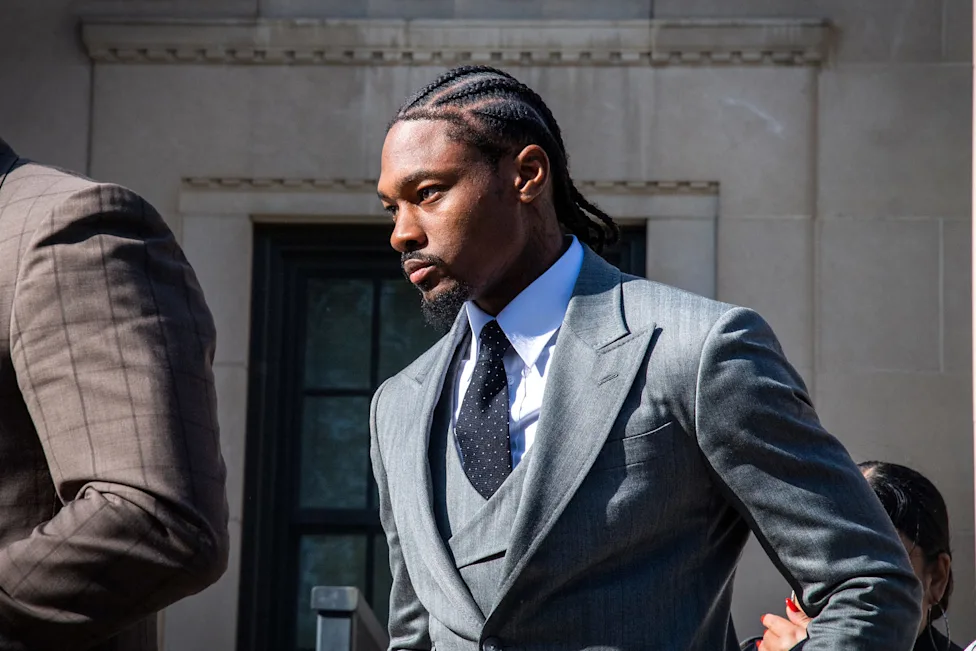
A Massachusetts jury found NFL wide receiver Stefon Diggs not guilty of charges that he assaulted and strangled his former live‑in chef during a dispute at his home late last year. The decision cleared Diggs, 32, of a felony strangulation or suffocation count and a misdemeanor assault and battery charge tied to a December 2, 2025 incident at his house in Dedham, a suburb southwest of Boston.
Diggs stood trial over two days in Dedham District Court. Jury selection and opening statements took place Monday. Witness testimony followed. On Tuesday, both sides rested and jurors began deliberating in the afternoon. After a little more than an hour, the six‑person jury returned not‑guilty verdicts on both counts.
How the relationship began
Court testimony and earlier reports described a long and “complicated” history between Diggs and Jamila “Mila” Adams. Adams told the court she first connected with Diggs about four and a half years ago after he contacted her on Instagram and asked her to cook for him.
She said their early interactions started as friendly and then turned intimate. According to Adams, the relationship became sexual before she ever moved in as his chef. Later, Diggs offered her a full‑time job in February 2025. Adams said the job called for her to live at his home and cook meals and snacks for about $2,000 a week while he played for the New England Patriots.
Adams testified that she moved into his Dedham house in July 2025 and stayed there until December. By late November, she said, tension in the home had started to build. She pointed to unpaid invoices, questions about her role and frustration over who Diggs invited into his inner circle. She also told jurors she felt disrespected when he took others, but not her, on a trip to Miami.
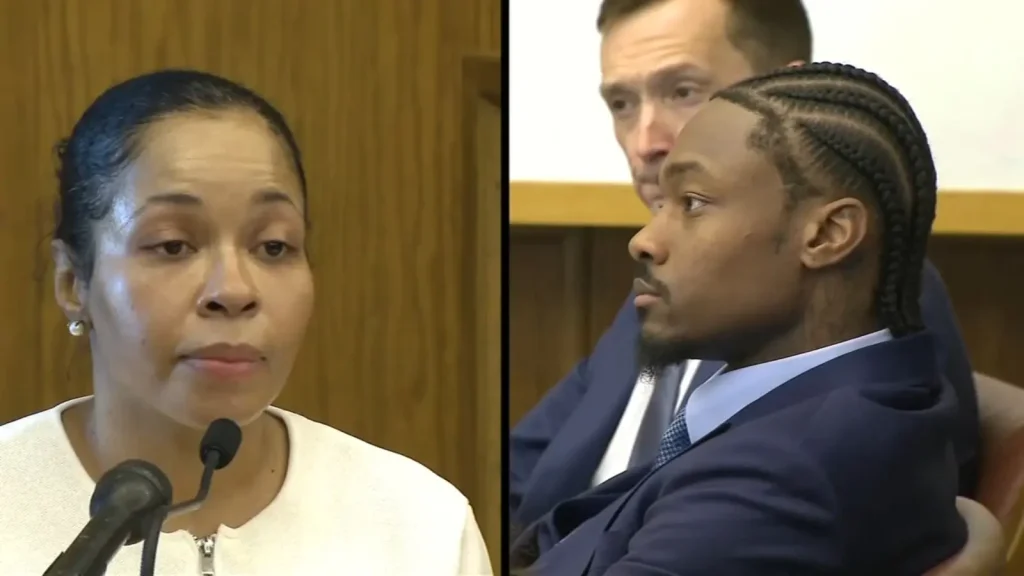
The accusations: pay dispute and an alleged attack
According to Adams, that tension boiled over on December 2 after Diggs returned home from a Patriots game. She said a disagreement over pay and expectations turned into a confrontation in her bedroom.
Adams testified that Diggs came into her room during the argument and “smacked me with an open hand” across the face. She said he then wrapped his arm around her neck from behind, putting her in a headlock and making it hard to breathe. In her words, she felt “in shock” and feared she might black out.
Adams described their relationship to jurors as “complicated.” She acknowledged the prior sexual element but insisted they were not romantically involved at the time of the alleged assault. She said angry text exchanges about money and being excluded from the Miami trip led up to the confrontation.
Two weeks later, on December 16, Adams went to the Dedham police station. Officer Kenneth Ellis testified that she appeared upset and crying when she arrived and asked to speak with a female officer. He said she eventually gave a statement identifying Diggs and alleged that he had slapped her and tried to choke her using the crook of his elbow.
Inside the courtroom: tense testimony and tough questions
Judge Jeanmarie Carroll presided over the trial, which began Monday after a six‑person jury and one alternate were seated. The panel included five women and one man, plus a female alternate who did not take part in deliberations.
Adams was the prosecution’s first witness and remained on the stand into day two. Under questioning from Assistant District Attorney Drew Virtue, she became emotional as she described the alleged assault. She told jurors that Diggs “began choking me” and that she “couldn’t breathe.”
During cross‑examination, defense attorneys pressed Adams about differences between her courtroom testimony and her original police report. They asked why her first statement did not mention the sexual nature of the relationship or the Miami trip. They also pointed to text messages she sent after December 2 that sounded apologetic. Adams said she felt financial and emotional pressure tied to her job and did not feel free to cut ties.
At several points, Judge Carroll told Adams to answer questions directly and avoid extra commentary. The judge struck parts of her responses from the record as nonresponsive and told jurors to ignore those comments.
Defense argument and jury’s decision
Diggs’ attorney Mitchell Schuster told jurors in opening and closing arguments that “there was no assault.” He argued that prosecutors had not backed up Adams’ story with physical evidence, medical records or photos. Co‑counsel Andrew Kettlewell also stressed what he called shifting claims and gaps in her story.
The defense pointed to the lack of documented injuries and to disputes over money. Schuster and Kettlewell said the case showed how wealthy athletes can become targets when personal and financial relationships sour. Outside court, Schuster said the verdict sent a message that people cannot exploit serious issues like domestic violence for financial gain.
After closing arguments, Judge Carroll explained the legal standards for assault and strangulation. Jurors then began deliberating. They sent a question to the judge asking for clarification on the elements of each charge. After the judge repeated those standards, the panel returned to the jury room and later delivered not‑guilty verdicts.
Reporters in the courtroom said Diggs appeared emotional but stayed composed as the clerk read the decision. His lawyers said he felt “relieved and grateful” and ready to move forward.
What the verdict means going forward
The acquittal ends the criminal case in Massachusetts. It does not automatically end Diggs’ scrutiny under the NFL’s personal conduct policy. The league allows commissioner Roger Goodell to discipline players even when they are not convicted in criminal court. NFL spokesperson Brian McCarthy said the matter remains under review.
Diggs is a free agent after the Patriots released him in March. He is coming off a season in which he topped 1,000 receiving yards and helped New England reach the AFC title game. That level of production would normally draw strong interest on the open market. Now, any team considering him must weigh his on‑field value against months of headlines, the league’s eventual ruling and how fans might react.
For Diggs, the jury’s decision closes one chapter shaped by accusations, leaked messages and live‑streamed testimony. Another chapter—his next contract, any NFL discipline and how the public sees his name—still has to be written.