



On “Luh Mo’ Love,” rising artist EJ Jones delivers more than a memorable single. He presents love as a source of healing, resilience, and connection in a world that often feels divided. Released on June 19, 2026, through Quality Control Music, the song and accompanying visual draw from the tradition of socially conscious soul music that helped define artists like Marvin Gaye, while introducing Jones as a fresh and distinctive voice. Driven by a smooth mid-tempo groove, the record highlights his talents as both a songwriter and producer, pairing heartfelt lyrics with infectious melodies that invite listeners to reflect, relate, and sing along.
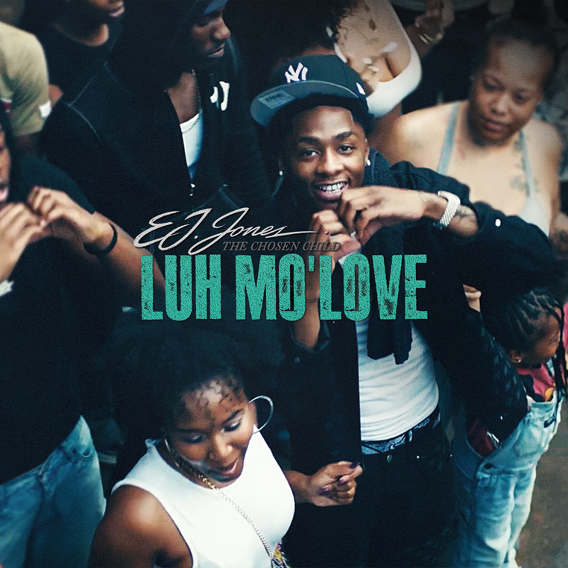
From its opening moments, “Luh Mo’ Love” emerges as a heartfelt reflection on the state of human connection in a world often marked by division and uncertainty. Rather than escaping reality, EJ Jones confronts it head-on, encouraging listeners to lower their emotional walls and embrace genuine vulnerability. Through lyrics such as, “Listen, you find a good love you got to keep it / Tell me why we gotta act hard, like we don’t need it,” Jones challenges the notion that strength requires emotional distance. Instead, he makes a compelling case for love as a source of healing, reminding listeners that authentic connection remains one of life’s greatest necessities.
A personal history turned into public testimony
Jones’s insistence on love carries extra weight when you consider the verses where he sketches his own biography. “I lost my mama to the streets / I lost my daddy to the streets… I got every reason to be mad at the whole world,” he admits, folding years of pain into a few unflinching lines. In another context, that history might lead to a hardened persona or a revenge fantasy. Here, it becomes proof that embracing love is a choice, not a given.
Instead of indulging in bitterness, Jones pushes against it. He asks listeners to resist the “temptations of hate” and to choose connection and empathy instead. The phrasing recalls classic protest soul, yet the delivery feels contemporary, steeped in the vocabulary of everyday struggle. As a result, “Luh Mo’ Love” lands somewhere between hymn and street‑corner confession.

A visual language of choice, faith, and community
The music video for “Luh Mo’ Love” expands the song’s themes into a stark visual metaphor. Jones moves through a dangerous, black‑and‑white world where people face a series of hateful choices, each framed as a crossroads. This monochrome space represents what happens when fear and anger go unchecked: the frame narrows, color drains away, and violence becomes the default.
Then, the video shifts. A second world appears, this time infused with color, faith, and resilience—an explicit nod to Jones’s church upbringing. In that version of the neighborhood, community members organize a block party; music, dancing, and shared joy take the place of confrontation. Jones doesn’t romanticize the setting, but he suggests that collective celebration is itself an act of resistance. The contrast between the two worlds drives home the song’s central thesis: given a choice between hate and love, you can decide which one shapes your environment.
From viral covers to Quality Control Music
“Luh Mo’ Love” arrives at what the press materials describe as “the peak of a sharp ascent,” and the timeline backs that up. Last year, Jones shared a viral cover of Sam Cooke’s “A Change Is Gonna Come,” a performance that caught the attention of Quality Control Music co‑founder Kevin “Coach K” Lee and ultimately led to his signing with the label. Soon after, a widely shared rendition of Bobby Caldwell’s “What You Won’t Do for Love” and standout appearances on From the Block and Cadillac Chronicles solidified his reputation as a musician’s musician with broad appeal.
Those early moments showed that Jones could inhabit canonical material without flattening it. He treated Cooke and Caldwell as starting points rather than safe covers, pushing his voice into spaces where vulnerability and virtuosity intersect. In turn, the label recognized the possibility of building a modern soul career around a singer whose instincts lean toward purpose, not just polish.
“Gas Station Love” and a breakout year
The foundation laid by those covers set up a breakout run that culminated in Jones’s 2025 single “Gas Station Love.” The track crossed 30 million streams, a striking number for an emerging artist working in a lane that often lives just outside the mainstream. A remix with multi‑platinum rapper BigxthaPlug pushed the song even further, while the single broke into the top 15 of Billboard’s Hot R&B Songs, Adult R&B Airplay, and Rhythmic Airplay charts.
Industry recognition followed. Jones earned spots on Billboard, Complex, and Pandora Artists to Watch lists for 2026, and YouTube named him a Trending Artist on the Rise. On the live circuit, he translated that momentum into a slot on the Blues Is Alright Tour in spring 2026, holding his own alongside established soul names like King George, Tucka, and Lenny Williams. Across platforms, his social following has now surged past one million.
Together, these milestones frame “Luh Mo’ Love” not as an isolated statement but as part of a deliberate narrative: an artist with deep roots in classic soul, moving steadily toward a larger stage.
“The Chosen Child” and the next chapter of modern soul
As Jones finishes work on his first full project, the press notes describe the 23‑year‑old as “The Chosen Child,” a phrase that captures both the weight of expectation and the sense of destiny that surrounds his story. He grew up steeped in Memphis’s rich soul traditions, and that heritage is audible in his spirited vocals and the emotional directness of his writing.
“Luh Mo’ Love” takes that legacy and points it forward. Rather than mimic the past, Jones uses familiar building blocks—church‑bred melisma, conversational lyricism, and groove‑driven instrumentation—to advance what the release calls a classic American sound for a new generation. In doing so, he joins a small but growing cohort of artists who treat soul not as a nostalgia vehicle but as a living language for talking about grief, survival, and community.
For listeners, the entry point is simple: start with the single, then let the video tell the rest of the story. For the soul genre, “Luh Mo’ Love” hints at a future where chart success and moral urgency can share the same space.