

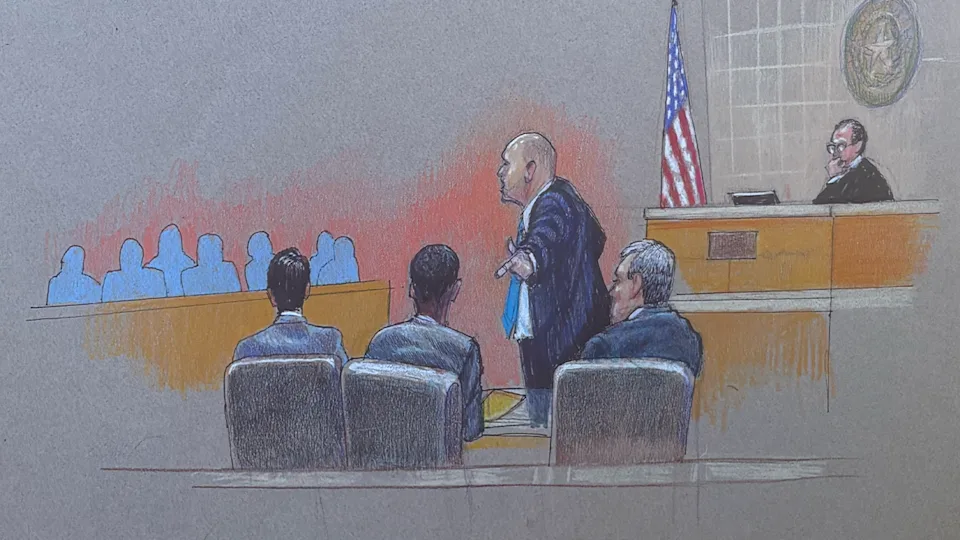
The karmelo anthony sentenced 35 years verdict closed one of Texas’ most watched recent murder trials. A Collin County jury convicted the 19‑year‑old of murder for fatally stabbing fellow runner Austin Metcalf during a high school track meet in Frisco and then chose a 35‑year prison sentence. Jurors needed less than three hours to reject his self‑defense claim and decide his future.

A tent dispute that turned deadly
The case dates back to April 2, 2025, at a district‑wide track meet at David Kuykendall Stadium in Frisco, a fast‑growing suburb north of Dallas. Both Anthony and Metcalf were 17‑year‑old athletes on rival teams: Anthony ran for Centennial High School, while Metcalf ran for Memorial High School.
On a rainy spring day, Anthony ducked under Memorial’s team tent in the bleachers even though he was not on that team, witnesses told investigators. Students testified that Metcalf and others asked him to leave. The argument escalated when Anthony refused to move. According to multiple witnesses, he retrieved his backpack, reached inside and warned, “Touch me and see what happens.”
A student said Metcalf then pushed Anthony in an effort to get him out of the tent area. Anthony responded by pulling a pocketknife and stabbing Metcalf once in the chest. The 17‑year‑old collapsed in the stands and later died of his injuries, cradled by his twin brother, Hunter, as chaos broke out around them.
Anthony left the stadium but soon turned himself in to police. According to court records and local reports, he told officers, “I’m not alleged, I did it,” while also insisting he had acted in self‑defense. A grand jury later indicted him on a murder charge, and a judge allowed him out on a reduced bond with house‑arrest conditions until trial.
Trial consumed by self‑defense and race
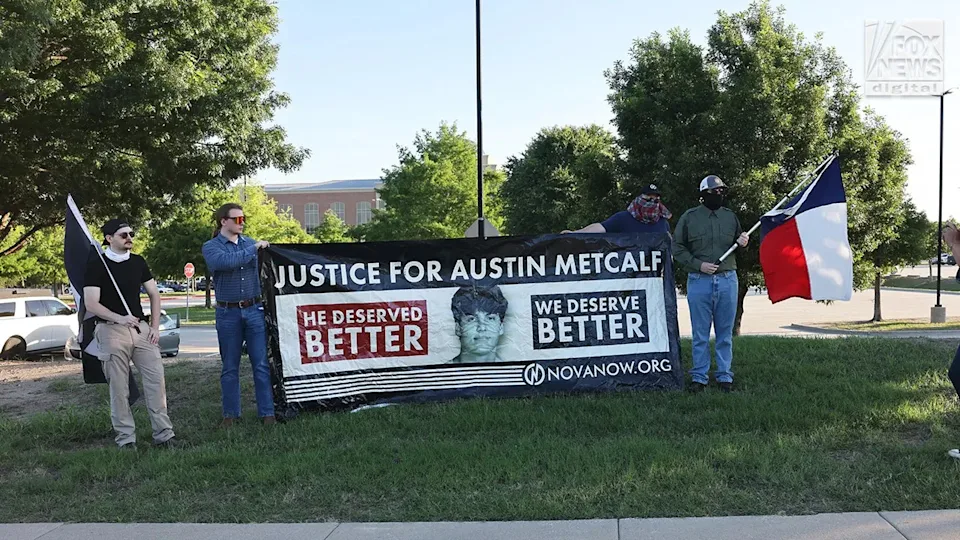
From the start, the karmelo anthony sentenced 35 years case drew national attention and sharpened racial tensions. Anthony is Black; Metcalf was white. Social media posts and out‑of‑state commentators framed the stabbing through that lens long before any juror saw evidence. Protests outside the courthouse in McKinney included dueling groups, from a local social‑justice organization to a group calling itself Protect White Americans, which rallied at the stadium where Metcalf died.
Inside the courtroom, self‑defense sat at the center of the weeklong trial. Anthony’s lawyers argued that he panicked and acted to protect himself after Metcalf pushed him and the confrontation turned physical under the tent. They told jurors that a slight 17‑year‑old felt cornered and made a split‑second decision in “chaos,” not murder.
Prosecutors said the law did not support that story. They argued that Anthony provoked the dispute by sitting under a tent that did not belong to his team, ignoring repeated requests to leave, and then escalating a minor seating issue into a deadly stabbing. Collin County First Assistant District Attorney Bill Wirskye called the attack “plain and simple murder,” not self‑defense, and told jurors, “This is not self‑defense, folks. It’s murder, plain and simple.”
Jurors watched enhanced stadium surveillance video, listened to student witnesses describe the argument and heard officers recount Anthony’s own statements. They also learned that under Texas law, a murder conviction carried a potential sentence of five years to life in prison, while manslaughter or “sudden passion” would cut that range dramatically.
Guilty verdict and rejection of “sudden passion”
After closing arguments, the jury began deliberating midday and returned the same afternoon. They found Anthony guilty of murder and did not opt for a lesser charge like manslaughter. During the punishment phase, jurors considered whether “sudden passion” applied, a legal finding that would have capped his sentence at 20 years. Anthony’s lawyers argued he was overwhelmed by emotion and acted before he could calm down.
Jurors were not convinced. They rejected the sudden‑passion claim and selected a 35‑year sentence, roughly a mid‑range punishment for murder under Texas law. The decision came after emotional testimony from both families. Metcalf’s relatives described a kind, driven teenager whose life ended at what should have been a safe school event. Anthony’s mother took the stand as the only defense witness in the sentencing phase and asked jurors for mercy, pointing to his 3.7 GPA and plans for the future before the stabbing.

What 35 years means for Karmelo Anthony
The karmelo anthony sentenced 35 years outcome means he will likely spend much of his adulthood in prison. Because he was 17 at the time of the stabbing, Texas law barred a death sentence or life without parole, but it allowed prosecutors to try him as an adult. With a 35‑year term, he faces a long stretch in the state prison system before he can seek parole, which in similar cases often comes only after serving at least half the sentence.
For the Metcalf family, the verdict offers some legal closure but not real comfort. For Anthony’s supporters, the case raises questions about how self‑defense laws work for Black teens, how online narratives can shape public opinion, and what it means when a tent dispute at a school event ends with one teenager dead and another headed to prison for decades.
The trial may be over, but the debates around the karmelo anthony sentenced 35 years case—about race, youth violence and where self‑defense ends and murder begins—are likely to continue in Texas and beyond.